Industrial Machine Castings: How They Are Made and Used
January 24, 2026
Inside a Metal Casting Foundry: Raw Materials to Precision Components
February 7, 2026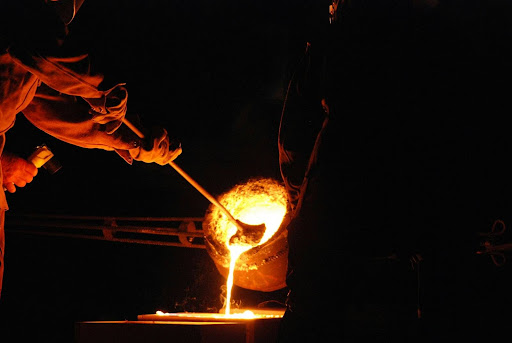
When people hear the word “foundry,” they often picture molten metal, heavy equipment, and sparks flying. While those elements are still part of the process, modern foundries do much more than pour metal into molds. Today, a metal casting foundry plays a critical role in manufacturing by producing precise, durable components used across a wide range of industries.
At G&W Foundry, we specialize in turning raw materials into finished castings that meet exact specifications. Understanding what a foundry does and how the process works can help clarify why metal casting remains such an essential part of modern production.
What Is a Metal Casting Foundry?
A metal casting foundry is a facility where metal is melted, poured into molds, and allowed to cool into specific shapes. These shapes, known as castings, are used as components in everything from industrial machinery to infrastructure and transportation equipment.
While the basic concept has existed for centuries, modern foundries combine proven techniques with advanced equipment, quality controls, and engineering expertise. The goal is to produce consistent, reliable parts that perform as intended in real-world applications.
In practical terms, a foundry acts as the bridge between design and finished metal components. Engineers and manufacturers rely on foundries to take detailed specifications and turn them into physical parts that can handle real operating conditions. This requires not only technical knowledge of materials and casting methods, but also a deep understanding of how those parts will be used once they leave the facility.
The Metal Casting Process Explained
While the individual steps may sound straightforward, each stage of the metal casting process requires careful control. Small variations in temperature, timing, or mold preparation can affect the final outcome, which is why experience and process consistency matter in modern foundry work. Although each foundry may have variations in its workflow, the core steps of metal casting generally follow the same sequence.
Pattern and Mold Creation
The process begins with a pattern, which is a replica of the part to be cast. Patterns are used to form molds, typically made from sand or other materials that can withstand high temperatures.
Mold design is critical. Proper gating, venting, and allowances for cooling and shrinkage all influence the quality of the final casting. This stage sets the foundation for accuracy and performance.
Melting the Metal
Once molds are prepared, metal is melted in a furnace. The type of furnace and melting temperature depend on the alloy being used. Controlling temperature and composition during this step helps ensure the metal flows properly and maintains the desired properties.
At this stage, impurities may be removed, and the molten metal is tested to confirm it meets the required specifications. Careful monitoring during melting helps ensure uniform composition throughout the batch. Maintaining consistency at this stage reduces the risk of weak points, porosity, or unexpected performance issues once the casting is in service. For applications that demand reliability, this level of control is essential.
Pouring and Solidification
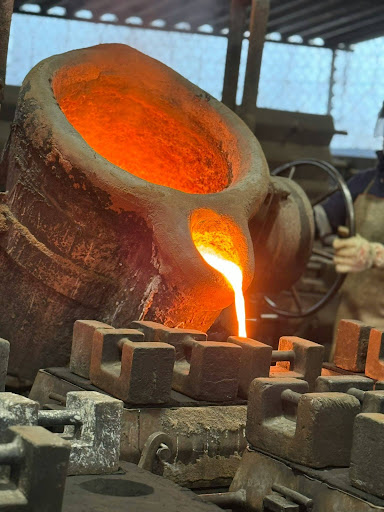
The molten metal is then carefully poured into the mold cavity. As it cools and solidifies, it takes on the exact shape of the mold.
Cooling time varies based on the size, complexity, and material of the casting. Proper cooling is essential to prevent defects and maintain structural integrity.
Shakeout and Finishing
After the metal solidifies, the mold is broken away in a process known as shakeout. The raw casting is then cleaned, trimmed, and finished as needed. This may include grinding, machining, or surface treatments to meet dimensional and performance requirements.
Finishing also provides an opportunity to verify that the casting matches design requirements. Dimensional checks and surface evaluations help confirm that the part is ready for its intended application. Depending on the use case, additional machining may be performed to achieve tighter tolerances or specific fit requirements.
Materials Commonly Used in Foundries
Iron foundries work with a range of materials, each selected for its specific properties and applications. Common metals include various types of iron and steel, as well as other alloys, depending on the needs of the project.
Selecting the appropriate material often involves balancing performance requirements with cost and manufacturability. Factors such as operating temperature, load conditions, and environmental exposure all influence material choice. Foundries work closely with customers to ensure the selected alloy aligns with both functional needs and long-term expectations.
Material selection affects strength, wear resistance, corrosion performance, and overall durability. Choosing the right metal is a key part of producing a casting that performs reliably over time.
Industries That Rely on Foundries
Foundries serve a wide range of industries, many of which depend on cast components for critical operations.
Because casting allows both strength and design flexibility, foundries support a diverse range of industries. Each sector brings its own performance requirements, making adaptability an important part of foundry operations.
Industrial and Manufacturing Equipment
Heavy machinery, pumps, valves, and structural components often rely on cast metal parts. Casting allows for complex shapes and internal passages that would be difficult or costly to produce using other methods.
Infrastructure and Construction
Castings are commonly used in infrastructure projects, including components for utilities, transportation systems, and public works. Durability and consistency are especially important in these applications.
Energy and Utilities
From power generation to fluid handling systems, energy-related industries depend on metal castings that can withstand high pressures, temperatures, and continuous use.
Quality Control in Modern Foundries
Precision and consistency are essential in metal casting. Modern foundries use quality control measures throughout the process to ensure each casting meets required standards.
This can include material testing, dimensional inspections, and visual evaluations at multiple stages. Identifying potential issues early helps prevent defects and ensures reliable performance in the field.
Quality control also helps ensure repeatability across production runs. Consistent inspection methods allow foundries to deliver castings that meet the same standards time after time, which is especially important for customers who rely on long-term part availability or replacement components.
Why Metal Casting Is Still Relevant Today
Despite advances in manufacturing technologies, metal casting remains a preferred method for producing many components. Casting allows for complex geometries, efficient material use, and scalability for both small and large production runs.
Modern foundries continue to evolve by improving efficiency, precision, and process control. These improvements help casting remain competitive and adaptable to changing industry demands.
Casting also offers efficiency advantages for certain part designs. By forming complex shapes in a single process, casting can reduce the need for extensive machining or assembly. This makes it a practical choice for components that require both structural integrity and detailed geometry.
Custom Castings and Engineering Support
Many projects require more than off-the-shelf parts. Foundries often work closely with customers to develop custom castings tailored to specific applications.
This collaboration may include design input, material recommendations, and process adjustments to achieve the best results. Early involvement in the design phase can help improve manufacturability and reduce long-term costs.
Early collaboration between customers and foundries often leads to better outcomes. Addressing design considerations upfront can help minimize production challenges, improve consistency, and support long-term performance once the casting is in service.
Environmental and Efficiency Considerations
Modern foundries also place greater emphasis on efficiency and environmental responsibility. Advances in melting technology, material recycling, and process optimization help reduce waste and energy use.
Recycling scrap metal is a common practice in foundries, allowing materials to be reused while maintaining performance standards. These efforts support sustainability without compromising quality.
Ongoing process improvements also help foundries operate more efficiently. Optimizing mold reuse, refining melting practices, and improving workflow all contribute to reduced material waste and more consistent results across production runs.
Understanding the Role of a Metal Casting Foundry
A foundry does more than produce metal parts; it supports entire industries by delivering components that meet strict performance and reliability requirements. From initial design to final inspection, each step plays a role in ensuring the finished casting performs as expected.
A metal casting foundry combines technical expertise, precision processes, and quality control to transform raw materials into functional components used every day across manufacturing, infrastructure, and industry.
At G&W Foundry, we focus on producing castings that meet real-world demands through careful process control and attention to detail. Understanding what a foundry does helps highlight why metal casting remains a cornerstone of modern manufacturing.