
What a Metal Casting Foundry Does: Complete Guide
January 31, 2026
What Sets an Iron Foundry Apart: Strength & Durability
February 21, 2026
When people think about a foundry, they often imagine molten metal and heavy machinery. While those elements are certainly part of the picture, the reality inside a modern metal casting foundry is far more precise and controlled. Every step, from raw material selection to final inspection, is carefully managed to produce components that meet strict performance and dimensional requirements.
At G&W Foundry, our work focuses on turning raw materials into dependable castings used across industrial and infrastructure applications. Understanding what happens inside a foundry helps clarify how precision components are produced and why metal casting continues to play a critical role in modern manufacturing.
Starting With the Right Raw Materials
The casting process begins long before metal is melted. Raw materials are selected based on the requirements of the finished component, including strength, durability, and intended operating conditions.
Common materials used in foundries include various grades of iron and steel, along with other alloys, depending on application needs. Each material brings different properties, such as wear resistance, vibration control, or thermal stability. Choosing the right material is an essential first step in producing reliable castings.
Before entering production, materials are evaluated to ensure they meet required specifications. This early attention to quality supports consistency throughout the process and helps reduce variability later on. Proper material selection also contributes to predictable performance once the casting is placed into service.
Pattern and Mold Preparation
Once material requirements are defined, the next step involves creating patterns and molds. Patterns are replicas of the final component and are used to form mold cavities that shape the molten metal.
Molds are typically made from sand or other heat-resistant materials. Proper mold design allows molten metal to flow evenly, gases to escape safely, and the casting to solidify without defects. Considerations such as gating, venting, and allowances for cooling and shrinkage are addressed at this stage.
Decisions made during mold preparation directly affect accuracy, surface quality, and overall casting performance. A well-designed mold supports smoother metal flow and reduces the likelihood of internal flaws, which can impact strength and durability.
Melting the Metal
With molds ready, metal is melted in a furnace designed to reach and maintain specific temperatures. The melting process must be carefully controlled to ensure the metal achieves the correct composition and fluidity for casting.
During melting, impurities may be removed, and the molten metal is monitored to confirm it meets required standards. Maintaining consistent chemistry at this stage helps reduce defects and supports predictable results in the finished casting.
This level of control is a key part of how a metal casting foundry produces components that perform reliably in demanding environments. Small variations in temperature or composition can affect the final product, which is why close monitoring is essential.
Pouring and Solidification
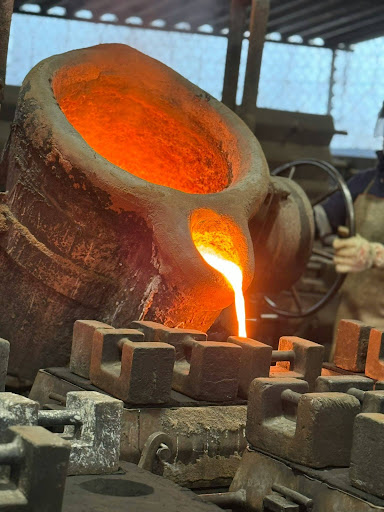
Once the metal reaches the appropriate temperature, it is poured into the mold cavity. Timing and technique are important, as even metal flow helps ensure the mold fills completely and evenly.
As the molten metal cools, it begins to solidify into the shape defined by the mold. Cooling rates vary based on the size and geometry of the casting, as well as the material being used. Controlled solidification helps prevent internal stress, cracking, or distortion.
Proper cooling is essential for maintaining both structural integrity and dimensional accuracy. This stage plays a major role in determining the long-term performance of the casting.
Shakeout and Initial Cleaning
After the metal has fully solidified, the mold material is removed in a process known as shakeout. The raw casting is separated from the sand or mold material and prepared for further processing.
Initial cleaning removes excess material, sand residue, and surface irregularities. This step prepares the casting for inspection and finishing operations while allowing technicians to evaluate its overall condition.
Shakeout and cleaning also make it easier to identify surface-level concerns early, helping ensure only sound castings move forward in the process.
Finishing and Machining
Finishing operations refine the casting to meet final specifications. This may include trimming gates and risers, grinding surfaces, or machining features to achieve tighter tolerances.
Not all castings require the same level of finishing. Some components are ready for use with minimal processing, while others require additional machining to meet precise dimensional or functional requirements.
Finishing ensures the casting is ready for integration into larger systems or equipment and helps support proper fit and performance in real-world applications.
Quality Control Throughout the Process
Precision is essential in metal casting. Quality control measures are integrated throughout the foundry process to verify material properties, dimensions, and surface integrity.
Inspections may occur at multiple stages, including raw material verification, in-process checks, and final evaluations. Identifying potential issues early helps ensure finished castings meet specifications and perform as intended in the field.
Consistent quality control also supports repeatability across production runs, which is critical for customers who rely on long-term part availability or replacement components.
From Foundry Floor to Real-World Applications
Once castings pass inspection, they are prepared for delivery and use. These components may become part of industrial machinery, infrastructure systems, or equipment that operates under continuous load.
Foundries support a wide range of industries by producing components that provide strength, stability, and long service life. From manufacturing and processing equipment to utility and infrastructure applications, castings play a foundational role.
From initial design considerations to final inspection, each step plays a role in delivering reliable results.
Why Modern Foundries Focus on Precision
While metal casting has a long history, modern foundries continue to evolve. Advances in equipment, process control, and quality assurance have improved accuracy and efficiency while maintaining the core principles of casting.
Precision is no longer limited to finishing stages; it’s built into every part of the process. This approach helps ensure cast components meet today’s performance demands while supporting consistency and reliability.
Understanding the Value of a Metal Casting Foundry
A metal casting foundry does more than melt and pour metal. It transforms raw materials into precision components through controlled processes, technical expertise, and attention to detail.
At G&W Foundry, we focus on producing castings that meet real-world demands across industrial applications. If you’re interested in learning more about our capabilities or discussing a specific project, contact G&W Foundry to start the conversation.