
The Rise of High-Strength Ductile Iron Castings
September 10, 2025
Inside the Metal Foundry
November 19, 2025
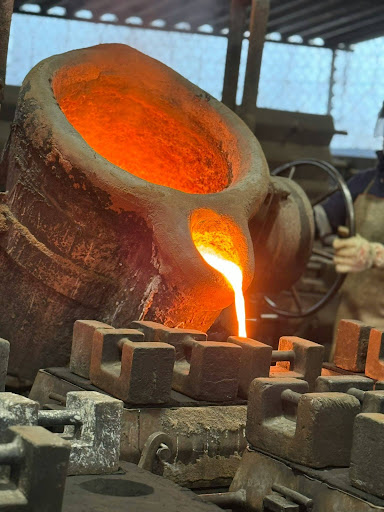
The modern metal casting foundry is no longer the dark, soot-covered facility of the past but is instead a high-tech hub of precision engineering and advanced automation. The global demand for complex metal components has pushed foundries to evolve, integrating digital technologies and sustainable practices to meet the needs of a rapidly changing industrial landscape. A metal casting foundry serves as the critical starting point for nearly every physical product we use, from the intricate housing of an electric vehicle motor to the massive structural components of a wind turbine. Understanding the inner workings of these facilities is essential for any engineer or manufacturer looking to optimize their supply chain and ensure the highest quality for their finished products.
The core of a modern foundry’s success lies in its ability to balance traditional craftsmanship with Industry 4.0 innovations. The process begins with sophisticated patternmaking, where digital twins and simulation software allow engineers to predict how molten metal will flow into a mold before a single drop of iron or aluminum is poured. By simulating the cooling and solidification process, foundries can eliminate defects like porosity and shrinkage in the virtual world, saving significant time and material costs in the physical one. This level of digital oversight ensures that when the metal is finally melted in high-efficiency induction furnaces, the resulting casting meets exact metallurgical specifications with minimal waste.
Automation and robotics have become the backbone of the casting floor, significantly improving both safety and consistency. Robotic arms are now frequently used for heavy lifting, mold handling, and precision pouring, which removes human workers from the most hazardous environments while ensuring a level of repeatability that manual labor cannot match. Furthermore, the integration of 3D sand printing has revolutionized the way molds and cores are produced. This additive manufacturing technology allows foundries to create complex internal geometries without the need for traditional tooling, drastically reducing lead times for prototypes and small-batch production runs.
Sustainability has also transitioned from a corporate buzzword to a fundamental operational requirement within the metal-casting industry. Today’s leading foundries are pioneers of the circular economy, utilizing a high percentage of recycled scrap metal and implementing closed-loop sand reclamation systems that allow molding materials to be cleaned and reused indefinitely. Energy efficiency is equally prioritized, with many facilities adopting smart grid technologies and heat recovery systems to power their operations more cleanly. By focusing on reducing their carbon footprint and minimizing landfill waste, modern foundries are proving that heavy industry can be both profitable and environmentally responsible, attracting a new generation of eco-conscious clients and partners.
As we look toward the second half of the decade, the role of the metal casting foundry will only grow in importance. The push for lightweighting in the aerospace and automotive sectors is driving the development of new high-performance alloys, while the global transition to green energy requires a massive influx of durable, cast-metal infrastructure. Foundries that embrace these technological and environmental shifts are setting the standard for the future of manufacturing. By combining the ancient art of casting with the latest in artificial intelligence and material science, the modern foundry remains the indispensable heart of global industry, turning raw materials into the essential building blocks of our modern world.