
Navigating the Modern Metal Casting Foundry
October 15, 2025
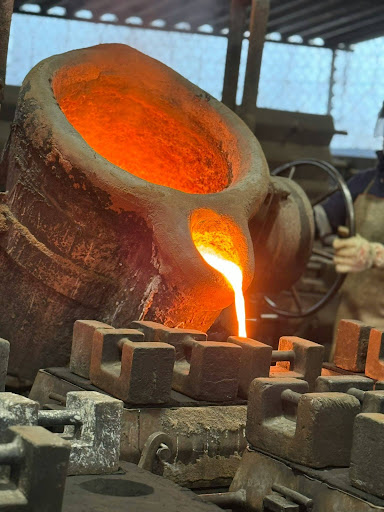
In the world of metal fabrication, choosing the right material is the difference between a component that lasts decades and one that fails under pressure. While traditional gray iron casting has been the industry workhorse for centuries, ductile iron casting has emerged as the premier choice for high-stress applications in 2025. Also known as nodular or spheroidal graphite iron, this material has become indispensable for industries ranging from automotive manufacturing to renewable energy infrastructure. The shift toward this material is driven by its unique ability to provide the strength of steel while maintaining the cost-effectiveness and versatility of cast iron.
Ductile iron is far more than just a stronger version of standard iron; it is defined by a specific metallurgical microstructure. Unlike traditional gray iron, where graphite exists in brittle flakes that can act as stress points, the graphite in ductile iron is formed into spherical nodules. This microscopic change is achieved by adding magnesium or cerium to the molten metal during the casting process. These spheres allow the metal to bend and deform slightly without fracturing, providing the ductility that gives the material its name. This structural integrity is why engineers increasingly specify nodular iron for parts that must survive extreme vibration or sudden impacts.
When comparing ductile iron to gray iron, the differences in performance are significant. Gray iron remains valued for its excellent vibration-damping properties and is often used for engine blocks or stationary machine bases. However, ductile iron offers vastly superior tensile strength and elongation. While gray iron is brittle and will snap under excessive tension, ductile iron can stretch significantly before failing. This makes it a far safer and more reliable option for moving parts, heavy-duty machinery, and structural components that are subject to unpredictable environmental stresses.
The benefits of utilizing ductile iron in 2025 extend beyond simple durability. Modern foundries are now leveraging advanced technologies like AI-driven thermal analysis and 3D sand printing to create complex geometries that were previously impossible to cast. This design flexibility, combined with a superior strength-to-weight ratio, allows manufacturers to reduce the overall weight of their products without sacrificing safety. Furthermore, ductile iron is inherently more corrosion-resistant than many steel alternatives, making it the global standard for municipal water infrastructure and underground piping systems that are expected to last for a century or more.
As we look toward the future of industrial manufacturing, the demand for high-quality castings continues to grow in several key sectors. In the automotive industry, ductile iron is essential for steering knuckles and suspension components, especially as electric vehicles require stronger parts to handle increased battery weight. In the energy sector, massive wind turbine hubs rely on the fatigue resistance of nodular iron to withstand decades of constant rotation. Even the mining and agricultural sectors depend on this material for heavy-duty crushers and tractor components that must perform in the harshest environments on earth.
Sustainability has also become a major factor in the popularity of iron casting. Ductile iron is nearly one hundred percent recyclable, fitting perfectly into the circular economy models that modern companies are adopting to reduce their carbon footprint. By choosing ductile iron, engineers are not only selecting a material that offers high performance and machinability but also one that supports a more sustainable manufacturing lifecycle. Whether you are designing a complex new engine component or a critical piece of infrastructure, ductile iron casting provides the reliability and technical advantages necessary to succeed in today’s competitive landscape.